Bakersfield's Soft Washing Authority
Soft Washing Bakersfield CA
Low-pressure, detergent-based cleaning that protects roofs, stucco, and siding while killing algae and mildew at the root — for results that last, not just look clean for a week.
Quick answer
Soft washing uses low pressure plus a cleaning solution that kills algae, mold, and mildew at the root — the safe method for Bakersfield roofs, stucco, EIFS, and vinyl siding that high pressure would damage. Because the growth is killed, not just rinsed off, results last noticeably longer.
Soft washing is a cleaning method built around chemistry and dwell time instead of force. A specialized detergent blend — typically built around surfactants and a controlled biocide — is applied at low pressure, allowed to sit on the surface long enough to break down algae, mold, mildew, lichen, and grime at the cellular level, and then rinsed away at a pressure gentle enough not to disturb the substrate underneath. The cleaning happens chemically before the rinse ever does the heavy lifting, which is the opposite approach from high-pressure washing, where force does most of the work.
That distinction matters because a large share of a home or building's exterior simply cannot tolerate high pressure. Composition shingles, concrete tile roofing, stucco, EIFS synthetic stucco, vinyl siding, and painted wood trim are all surfaces that high-pressure equipment can strip, crack, force water behind, or otherwise damage. Bakersfield's climate — long dry summers followed by damp winter mornings and heavy dew — creates ideal conditions for algae and mildew to take hold on north-facing roof slopes, shaded stucco walls, and siding that never gets direct sun exposure. Soft washing is the method built specifically to remove that growth without damaging what it's growing on.
What Soft Washing Actually Is
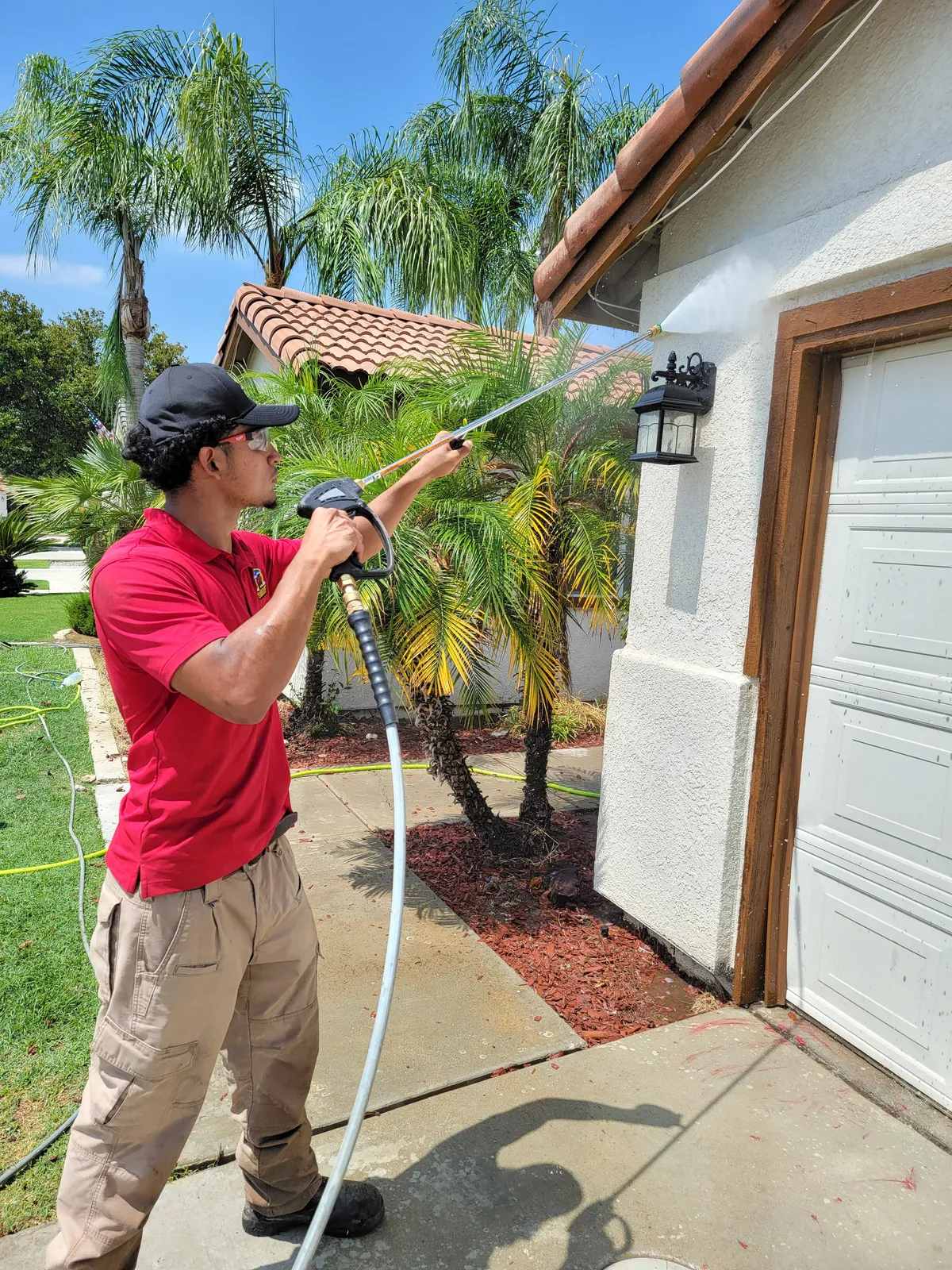
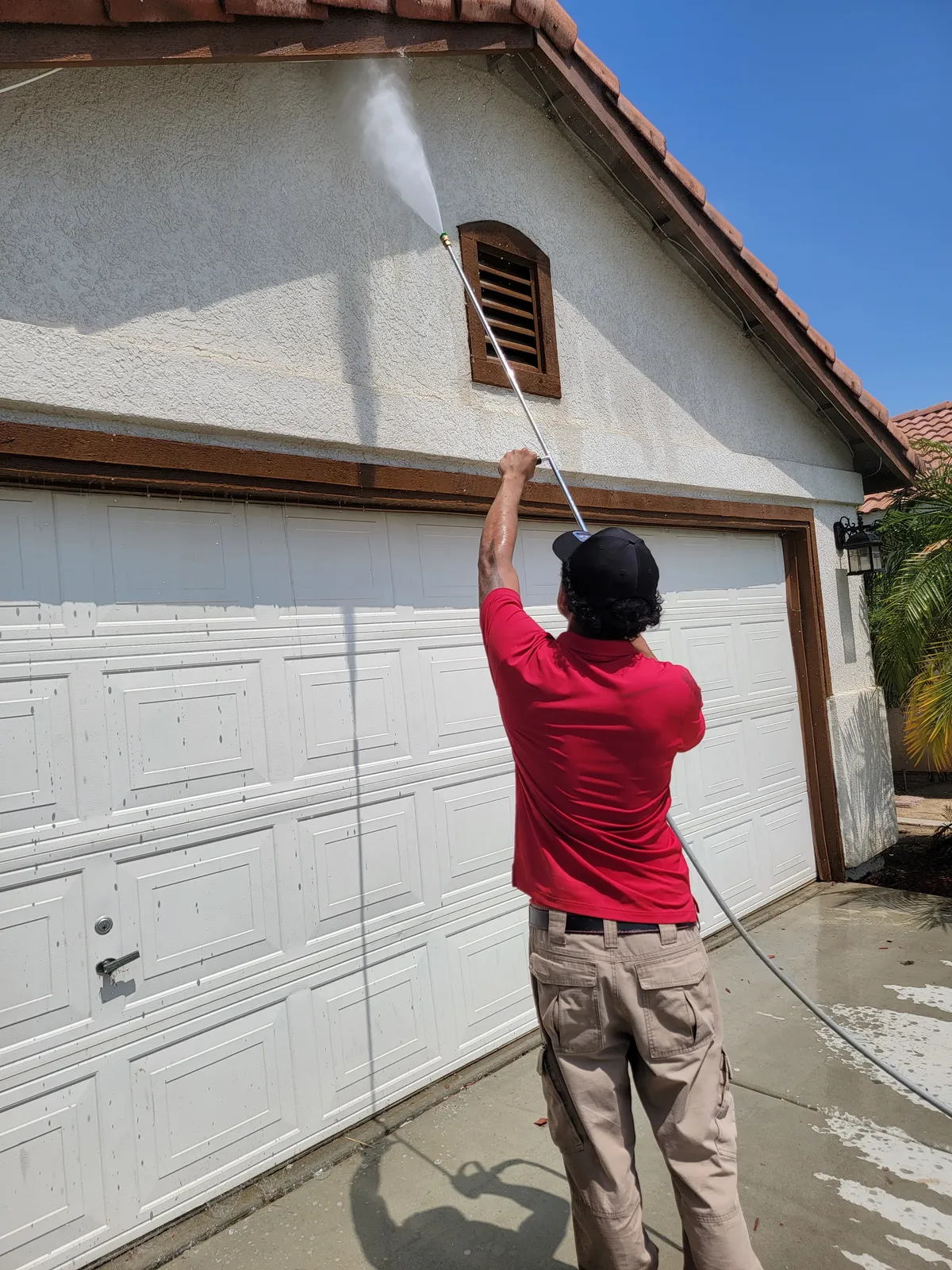
Soft washing combines three elements: a cleaning solution matched to the type of growth and surface, sufficient dwell time for that solution to penetrate and break down organic material, and a low-pressure rinse — usually under 500 PSI, often far less — to remove the residue. There's no scrubbing and no mechanical force doing the cleaning; the work happens at the microbial level. This is why a soft-washed roof or wall often looks only partially cleaner immediately after rinsing but continues to lighten over the following days as remaining residue breaks down and washes off naturally with rain or sprinklers.
The detergent blend is also where soft washing earns its name as more than "a gentler pressure wash." The biocide component doesn't just remove the visible black streaking or green film — it kills the algae and mold spores at the root, including the parts of the organism embedded below the visible surface. That's the mechanical difference between soft washing and simply blasting a surface clean: a pressure-only approach can strip away the visible growth while leaving the root structure intact, which is exactly why pressure-washed roofs and siding so often look dirty again within months.
Surfaces That Require Soft Washing, Not Pressure
Composition shingle and concrete tile roofing top the list — high pressure on a roof strips protective granules, drives water under flashing and underlayment, and can void manufacturer and roofing-contractor warranties outright. Stucco and EIFS (synthetic stucco) are similarly vulnerable; both are porous, moisture-sensitive assemblies where forced water under pressure can crack the finish coat or push water into the wall system. Vinyl siding can crack, warp, or have panels blown loose by aggressive pressure, and painted surfaces — wood trim, fascia, fences — can have paint stripped or chipped by a nozzle held too close.
These are exactly the surfaces homeowners worry about most, because they're also the most visible parts of a property: the roofline, the front-facing stucco, the siding that frames every curb-appeal photo. BrightSide treats these surfaces with the detergent-and-dwell-time approach soft washing is built for, never substituting pressure for patience on materials that can't take it.
Why High Pressure Damages Delicate Surfaces
The damage mechanism is straightforward: high-pressure water concentrates force into a small area, and delicate building materials aren't engineered to resist that kind of point-load impact. On a roof, that force can lift or crack shingle tabs and drive water past the shingle layer into the underlayment, where it can cause leaks that don't show up for months. On stucco and EIFS, pressure can blow out the finish coat or force moisture into the wall assembly, leading to trapped moisture and potential mold growth inside the wall rather than on it.
This is also why warranty language from roofing manufacturers and many siding manufacturers explicitly excludes or voids coverage for pressure-washing damage. Soft washing exists precisely because these surfaces still need cleaning — algae, mildew, and biological staining don't go away on their own — but they need a method that works with the material instead of against it.
How Soft Washing Kills Growth at the Root for Longer-Lasting Results
Algae, mold, and mildew aren't just surface stains — they're living organisms with root structures that anchor into porous materials like roofing granules and stucco texture. A cleaning method that only removes the visible growth without addressing those root structures sets the surface up to regrow the same staining within a matter of months, particularly in Bakersfield's shaded, dew-prone microclimates where moisture lingers longest.
The biocide in a proper soft-wash solution is formulated to penetrate and kill that root structure, not just bleach or blast away what's visible. That's the reason soft-washed roofs and siding routinely stay clean for a year or more, while a pressure-only clean on the same surface — where it's even safe to attempt — tends to show regrowth within a single season. BrightSide selects and mixes solutions based on the specific growth type and surface material on each property, rather than running one generic mix across every job.
When to Choose Soft Washing vs. Pressure Washing
The decision comes down to the surface, not the dirt. If the area in question is a roof, stucco wall, EIFS finish, vinyl or painted siding, or any other surface that can crack, strip, or trap moisture under force, soft washing is the only appropriate method — pressure washing simply isn't an option there regardless of how stained the surface looks. If the area is concrete, brick, block, or another hard, durable surface, pressure washing is typically more efficient and effective, since those materials can absorb the mechanical force soft washing intentionally avoids.
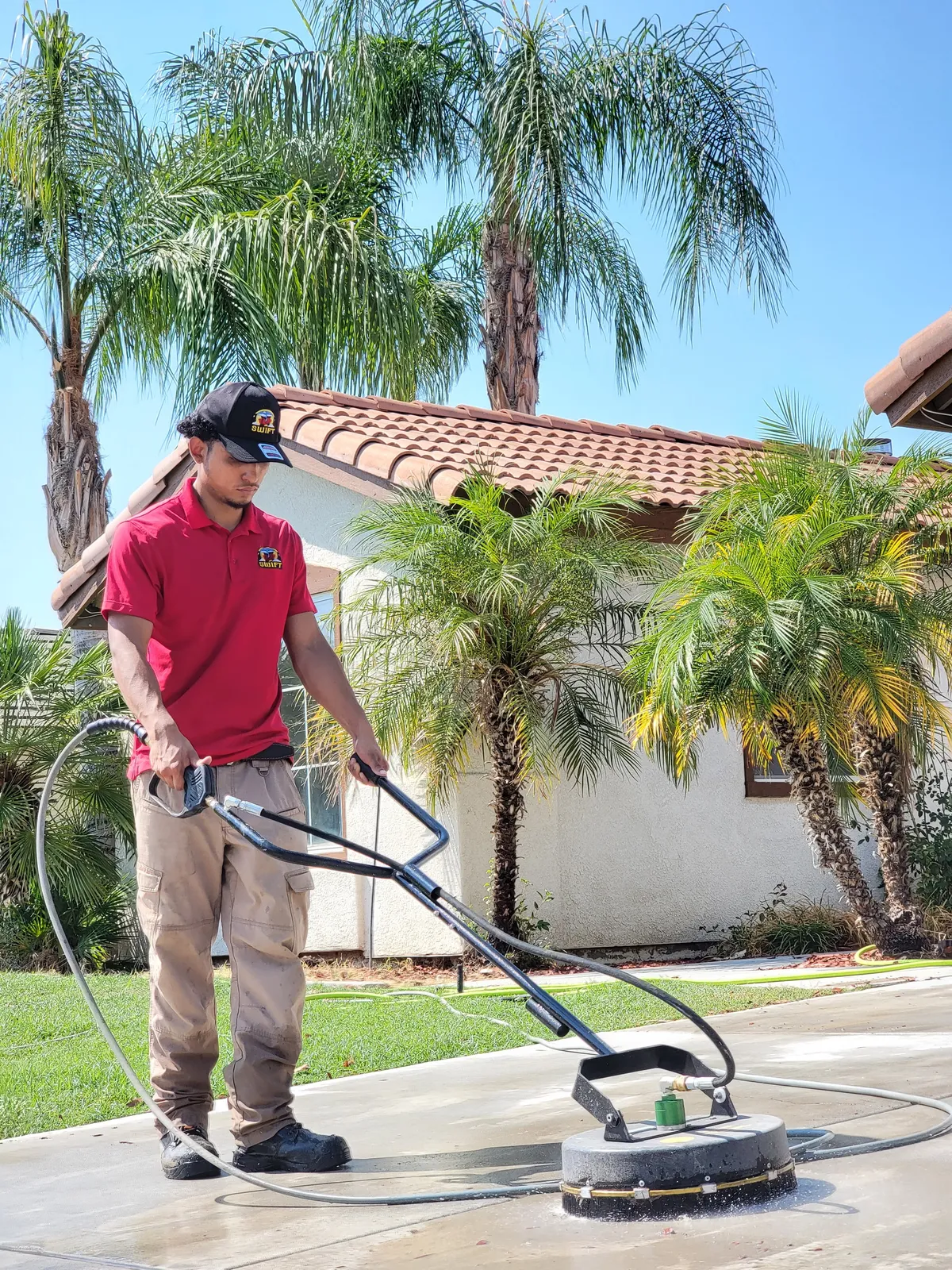
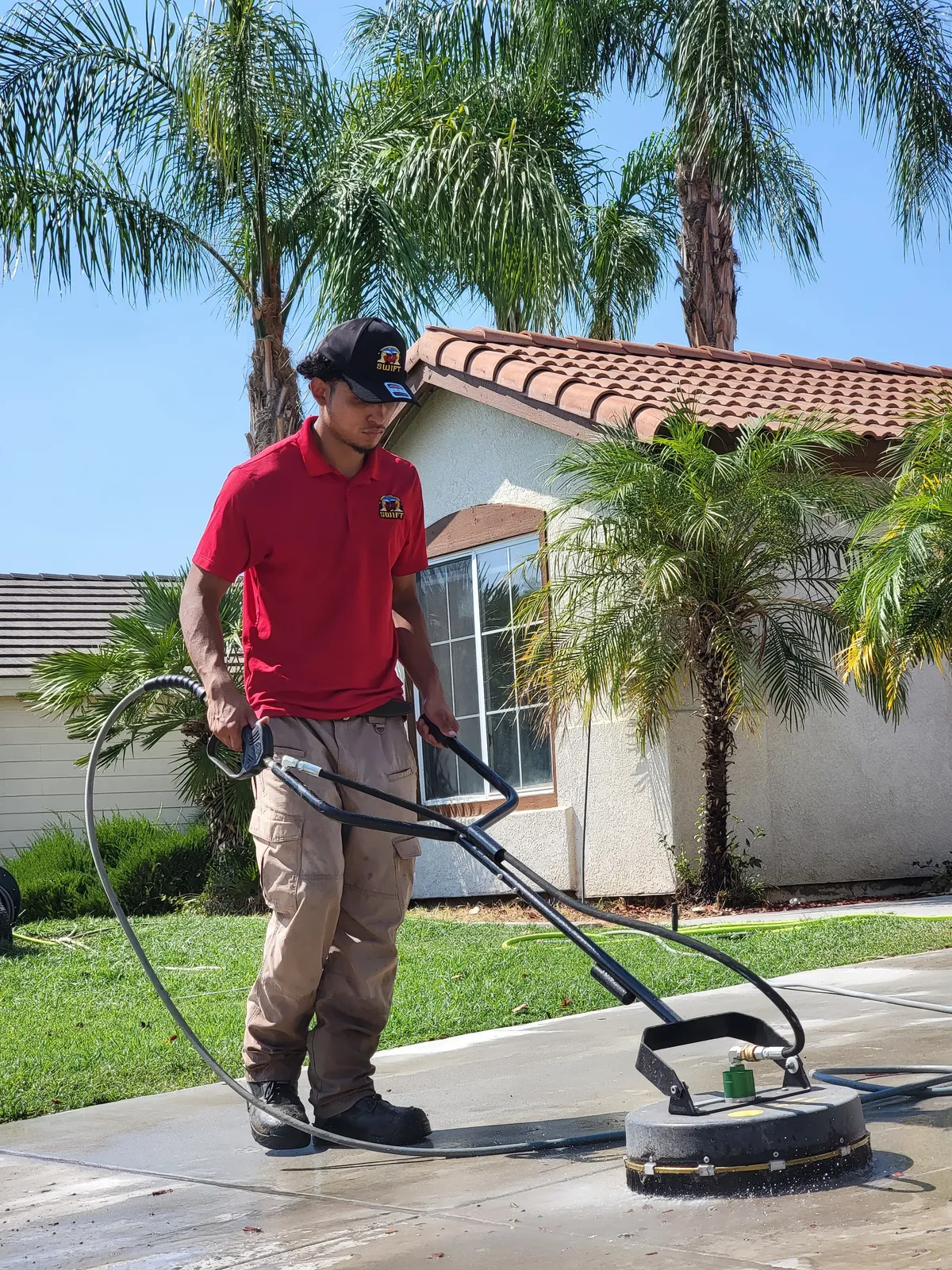
Most full-property cleanings in Bakersfield use both methods in the same visit: soft washing for the roof, stucco, and siding, and pressure washing for the driveway, walkways, and any block wall fencing. For more on when pressure is the right call, see our pressure washing pillar page; for properties dealing specifically with grease or heavy commercial soiling, see hot water pressure washing.
Frequently Asked Questions
Is soft washing safe for my roof?+
Yes — soft washing is the manufacturer-recommended method for cleaning composition shingle and tile roofs. It uses low pressure and a targeted detergent rather than force, so it removes algae and lichen staining without lifting shingle tabs, stripping granules, or risking the leaks that high-pressure roof cleaning can cause.
Why is there black streaking on my roof, and will soft washing remove it?+
Those dark streaks are typically Gloeocapsa magma, an algae that feeds on the limestone filler in shingle granules. Soft washing's biocide solution kills the algae at the root, not just the visible streak, which is why results last far longer than a simple rinse or scrub.
Can soft washing be used on stucco?+
Yes, and it's the preferred method. Stucco and EIFS are porous and moisture-sensitive, so high pressure risks cracking the finish or forcing water into the wall assembly. Soft washing cleans algae, mildew, and grime off stucco using low pressure and dwell time instead of force.
How long do soft washing results last?+
Because soft washing kills algae and mold at the root rather than just removing the visible growth, most Bakersfield homes see clean results last a year or more, depending on shade, irrigation overspray, and how much moisture a particular roof slope or wall retains.
Will the cleaning solution harm my landscaping?+
BrightSide pre-wets and protects surrounding plants and lawn areas and rinses thoroughly after application, following standard soft-wash precautions to minimize any contact with landscaping during the cleaning process.
Recent Work in Bakersfield, CA