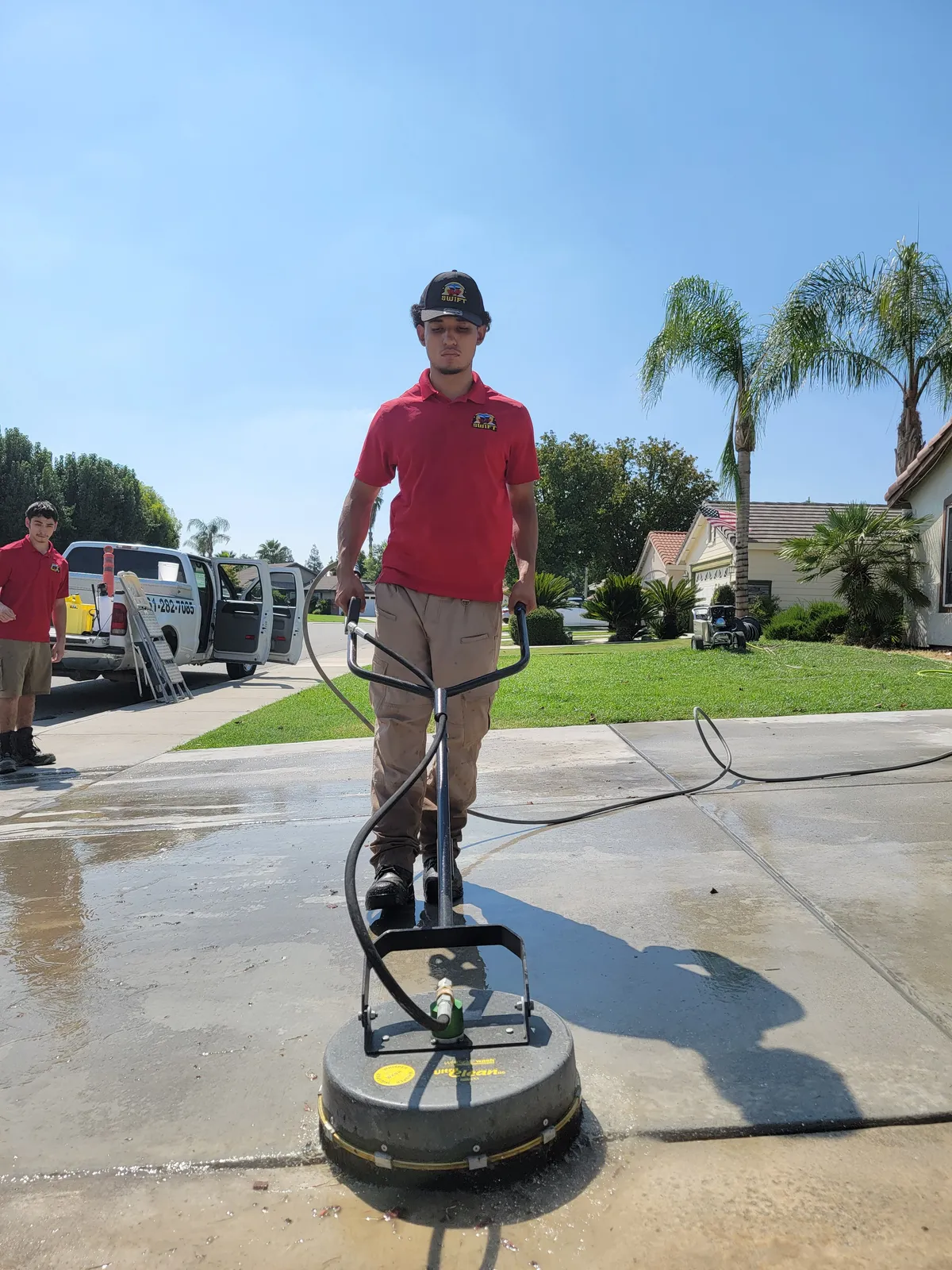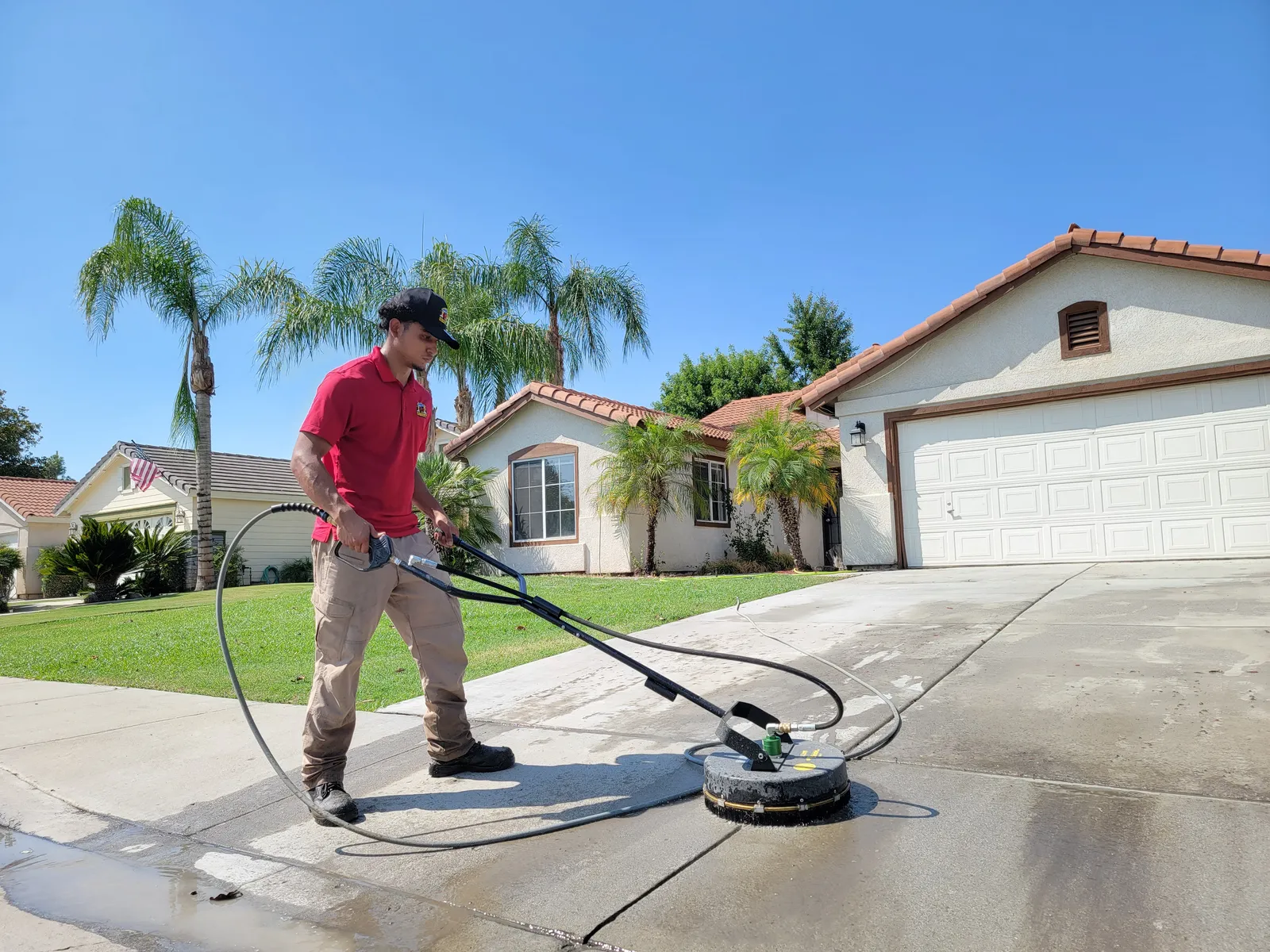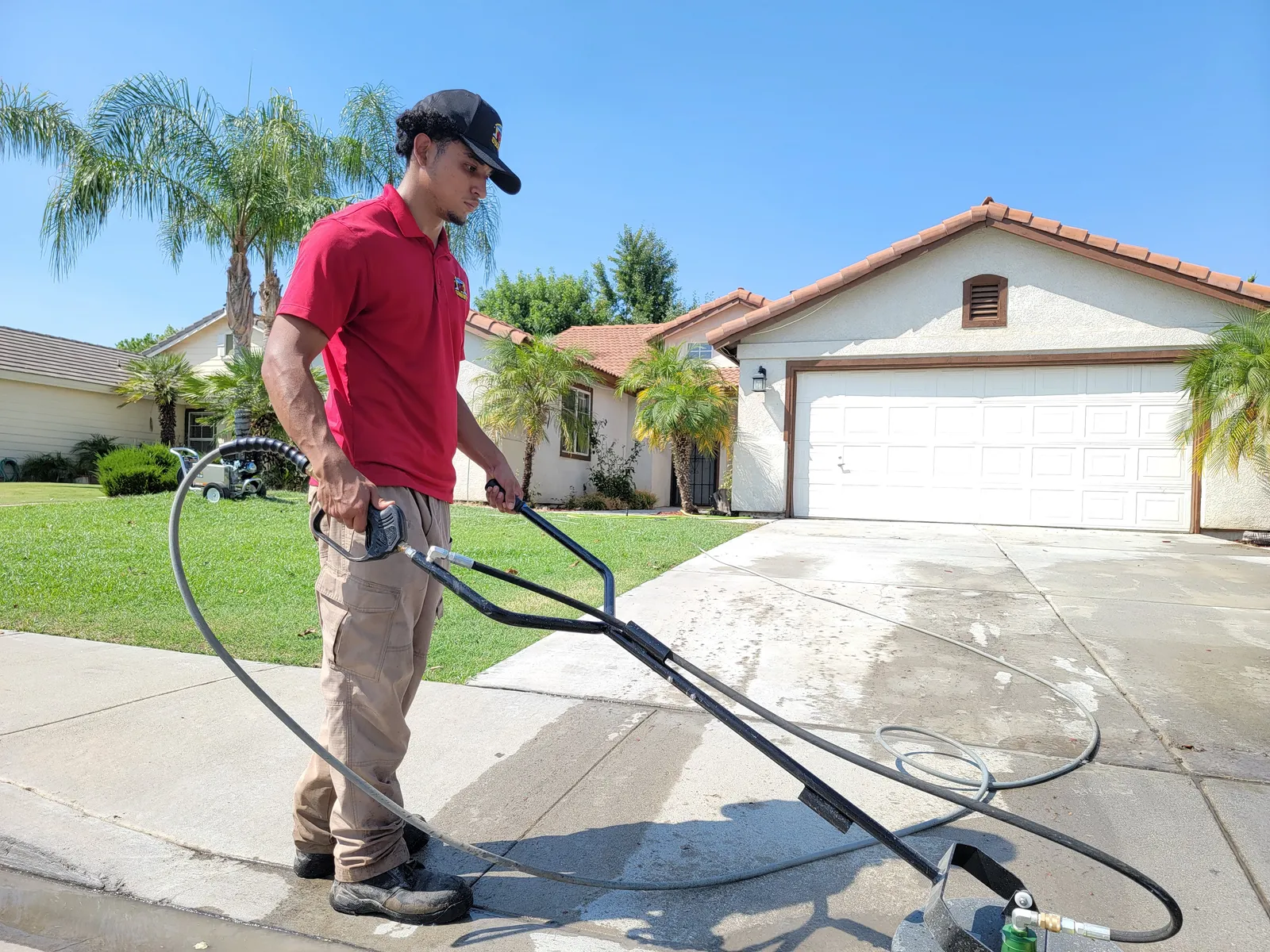
Bakersfield's Hot Water Pressure Washing Authority
Hot Water Pressure Washing Bakersfield CA
Heated, high-pressure cleaning that breaks down grease, oil, and fuel residue far faster than cold water — the professional standard for dumpster pads, drive-thrus, and commercial kitchen exhaust areas.
Quick answer
Hot water pressure washing heats the water to break down grease, oil, and food residue far faster than cold water. It's the professional standard for Bakersfield dumpster pads, drive-thrus, gas stations, and fleets. BrightSide matches temperature and pressure to each surface. Call (661) 381-1011.
Hot water pressure washing pairs a heated water supply — often delivered well above 150°F — with the same mechanical force used in standard pressure washing. The heat does something cold water physically cannot: it lowers the viscosity of grease, oil, and fuel residue, breaking the molecular bond between the contaminant and the surface so it lifts and rinses away rather than smearing into a thinner, still-stuck film. Cold water can push grease around a surface for an hour with diminishing returns; hot water at the right temperature can clear the same area in a fraction of the time and actually remove the residue rather than redistribute it.
This makes hot water pressure washing the professional standard for any surface where the contaminant is petroleum- or fat-based rather than simple dirt or dust. Commercial kitchens, fueling areas, fleet yards, and waste-handling zones across Bakersfield generate exactly this kind of soiling daily, and cold-water cleaning on these surfaces typically produces a temporarily lighter-looking surface that re-darkens within days as residual grease works back to the top. BrightSide runs hot water equipment specifically for the commercial accounts and stubborn residential oil stains where cold water isn't enough to finish the job.
Why Heat Changes the Cleaning Equation
Grease and oil are hydrophobic — they resist mixing with water and tend to cling to porous surfaces like concrete, where they soak in deeper the longer they sit and the hotter the surface gets, which describes most Bakersfield commercial concrete through a long, hot summer. Heat reduces the viscosity of these substances, essentially thinning them out so the detergent and water flow can fully surround and lift the residue instead of just pushing against the surface tension of a thick, stuck film.
Cold water pressure washing relies almost entirely on mechanical force and detergent chemistry to do that same job, which works fine on dirt, mud, and light grime but struggles against anything oil-based. The result on a grease-heavy surface cleaned with cold water alone is often a surface that looks improved immediately but reverts within days, because the underlying residue was redistributed rather than fully broken down and removed. Hot water closes that gap by doing chemically what cold water can only attempt mechanically.
Commercial Jobs That Require Hot Water
Certain commercial surfaces aren't simply better served by hot water — they effectively require it to get a genuinely clean result. Dumpster pads accumulate a near-constant film of food grease, animal fat, and decomposing organic residue that bakes into concrete under direct sun. Drive-thru lanes and fast-food parking areas pick up dropped food oil and tracked-in kitchen grease from every vehicle that passes through. Restaurant and commercial kitchen exhaust pads sit directly beneath rooftop or wall-mounted grease exhaust systems, catching condensed cooking oil runoff that's often the heaviest, most stubborn soiling on any commercial property.
Gas station and fuel-island forecourts deal with dropped fuel, oil drips, and tire residue layered over years of vehicle traffic — a combination cold water rarely fully lifts. Fleet and equipment yards accumulate engine oil, hydraulic fluid, and diesel residue from parked and serviced vehicles, while loading docks collect a mix of forklift hydraulic leaks, packaging residue, and tracked-in road grease from delivery trucks. Each of these is a recurring commercial cleaning need in Bakersfield, and each is a job where hot water isn't an upsell — it's the only method that actually resolves the underlying soiling instead of masking it temporarily.
Hot Water vs. Cold Water: Matching the Method to the Soil
Cold water pressure washing remains the right, more efficient choice for dirt, dust, algae staining, and general grime — the majority of residential work and a meaningful share of commercial concrete cleaning. There's no benefit to heating water for a job that mechanical force and detergent already handle well, and hot water equipment costs more to run, so matching the method to the actual soil type keeps a job both effective and reasonably priced.
The decision point is the contaminant, not the surface. The same dumpster pad and the same sidewalk can both be concrete, but one is coated in baked-on grease and the other in ag dust and tire marks — they need different approaches entirely. BrightSide evaluates what's actually on the surface before quoting hot or cold water service, rather than defaulting to one method across every job.
Temperature and Pressure Matched to the Job
Hot water pressure washing isn't a single fixed setting — temperature and pressure both need to be matched to the specific soil and surface being cleaned. Heavy grease on durable commercial concrete can take higher heat and higher pressure than, say, a residential driveway with an oil stain sitting on a more weathered slab. Running maximum heat and pressure on every job isn't more effective, it's just more likely to cause unnecessary wear on a surface that didn't need that much force to come clean.
BrightSide sets temperature and pressure based on direct assessment of the contaminant and the substrate underneath it, the same way pressure and nozzle selection are matched to surface type on cold-water jobs. For surfaces that can't tolerate force at all — roofing, stucco, siding — soft washing remains the correct method regardless of what's soiling them; see our soft washing pillar page for that distinction.
Residential Use: Driveway Oil Stains and Garage Floors
Hot water pressure washing isn't only a commercial service. Driveway oil stains from a leaking vehicle, garage floor grease buildup, and patio grill-grease drips are common residential situations where cold water alone often isn't enough to fully lift the stain, particularly once it's had weeks or months to set into the concrete under summer heat. A hot water treatment, sometimes paired with a degreasing pre-treatment, can resolve staining that's resisted previous cold-water cleaning attempts.
Homeowners dealing with a stubborn oil stain that hasn't responded to standard driveway cleaning are exactly the residential customers who benefit from hot water service — it's worth requesting specifically rather than assuming a standard pressure wash will finish the job on grease-based staining.
Frequently Asked Questions
Why does hot water clean grease better than cold water?+
Heat lowers the viscosity of grease and oil, breaking down the bond between the residue and the surface so it lifts away during rinsing instead of just spreading thinner across the surface. Cold water relies on pressure and detergent alone, which often isn't enough against petroleum- or fat-based soiling.
Does my business need hot water pressure washing or will cold water work?+
If the surface deals with grease, cooking oil, fuel, or hydraulic fluid — dumpster pads, drive-thrus, kitchen exhaust pads, fuel islands, fleet yards, loading docks — hot water is typically necessary for a result that actually lasts. For dirt, dust, and general grime, cold water pressure washing is usually sufficient and more cost-effective.
Can hot water pressure washing remove an old oil stain from my driveway?+
Often, yes. Hot water combined with degreasing pre-treatment can break down oil staining that's resisted standard cold-water cleaning, especially on stains that have had time to set into the concrete under Bakersfield's summer heat. Very old, deeply set stains may lighten significantly rather than disappear completely.
How often do dumpster pads and grease areas need hot water cleaning?+
Most commercial dumpster pads, drive-thru lanes, and kitchen exhaust pads benefit from a regular cleaning schedule — often monthly or quarterly depending on volume — since grease accumulation is constant and compounds quickly if left untreated.
Is hot water pressure washing safe for all commercial concrete?+
When temperature and pressure are matched to the surface and soil type, yes. BrightSide assesses each surface before service and adjusts settings accordingly, since running excessive heat or pressure on a surface that doesn't need it adds wear without adding cleaning benefit.
Recent Work in Bakersfield, CA