Architectural Surface Specialists
Professional House Soft Washing in Bakersfield, CA
Gentle, low-pressure cleaning engineered for stucco, EIFS cladding systems, and vinyl siding — lifting smog film and mineral spotting without driving water behind your walls.
Surface-Specific Care for Bakersfield, CA Homes
Architectural surfaces each demand a different touch. Dry stucco and EIFS cladding are porous and absorb water readily, so high pressure can force moisture behind the system and trigger hidden rot. Vinyl siding flexes and seals at the seams, where blasting can inject water into the wall cavity.
We use a low-pressure soft wash with a tailored detergent dwell time that breaks down organic growth and atmospheric film at the surface, then rinses clean — no forced-water intrusion, no etched stucco texture, no streaked vinyl.
Targeting Central Valley Environmental Wear
Homes across the region battle deep valley agricultural smog film, dust accumulation from regional dust storms, and heavy hard-water mineral spotting from sprinkler overspray. Left untreated, these deposits bond to siding and dull your home’s finish.
Our crews dispatch from 7400 Henness Ct in Bakersfield, CA with surface-matched rigs that restore curb appeal while protecting paint, caulk lines, and trim.
*Property Note: Pressure-washing stucco and EIFS at full force can permanently etch the texture and saturate the substrate. Soft washing is the manufacturer-preferred method.
The BrightSide House Wash Protocol
- 1
Surface & Substrate Assessment
We identify stucco, EIFS, or vinyl and set pressure and detergent accordingly before any water touches the wall.
- 2
Landscape & Fixture Protection
Plants are pre-soaked and covered; lights and outlets are shielded.
- 3
Low-Pressure Detergent Application
A balanced soft-wash blend dwells to break down smog film, mold spores, and mineral haze.
- 4
Controlled Rinse & Inspection
A gentle rinse clears residue and we walk the perimeter to confirm an even, streak-free finish.
If you've watched your stucco go from bright white to a dingy gray-green over a year or two, you're not imagining it. Bakersfield's Central Valley air carries agricultural dust, vehicle exhaust film, and seasonal dust-storm grit that settles into porous siding and never fully washes off in the rain — because we barely get rain.
Soft washing is the correct way to clean stucco, EIFS, and vinyl siding without damaging them. It uses low-pressure rinsing combined with a detergent solution that's given time to work, rather than blasting the dirt off with force. For homeowners across Bakersfield, CA and the surrounding Kern County communities, that distinction is the difference between a house that looks new again and one with cracked stucco or stripped paint.
Why Soft Washing, Not Pressure Washing, for Stucco, EIFS, and Vinyl
Stucco and EIFS (exterior insulation finish systems) are cement-based or foam-backed assemblies that are not designed to take direct high-pressure water. A wand running at 3,000+ PSI can drive water behind the surface coat, force moisture into the foam substrate on EIFS, or simply blow pits and channels into softer stucco finishes. Once water gets behind either system, it can sit there for weeks, which is how small jobs turn into stucco repair bills.
Vinyl siding has its own weak points: the panels lock together with lips and channels that high pressure can pry open, and concentrated pressure can crack or warp the vinyl itself, especially on a hot Bakersfield afternoon when the material has already softened slightly in the sun. Soft washing sidesteps all of this. We apply a cleaning solution at low pressure — usually under 500 PSI, similar to a garden hose with a nozzle — and let the chemistry do the work of breaking the bond between the grime and the surface.
The result is a wash that lifts dirt, organic growth, and staining off the surface rather than trying to physically scour it off. That's gentler on caulking, paint, window seals, and trim, all of which take a beating under improper high-pressure cleaning.
What's Actually Growing and Building Up on Your Walls
Most of what darkens a Bakersfield home's exterior isn't simple dust — it's a mix of airborne agricultural particulate, vehicle exhaust film, and organic growth that has found a foothold in the texture of stucco or the seams of vinyl. Algae and mildew thrive wherever moisture lingers, and Kern County gives them plenty of opportunities even in a dry climate.
North-facing walls are usually the worst offenders. They get the least direct sun, so the dampness left behind by tule fog in fall and winter mornings doesn't evaporate as quickly, giving mildew and algae spores time to establish themselves in the stucco texture. You'll often see this as a greenish-black tint that's darker and more uniform than ordinary dirt.
Hard-water mineral spotting is a separate problem with a separate fix. Sprinkler overspray hitting the same section of wall day after day leaves behind calcium and mineral deposits that look like chalky white or gray blotches, usually low on the wall near plant beds. A standard detergent wash helps with general grime, but heavy mineral staining often needs a targeted treatment to fully break down the deposits.
How the Detergent and Dwell Time Process Works
The core of soft washing is letting the cleaning solution sit on the surface long enough to actually break down what's there before any rinsing happens. We apply a detergent blend formulated to kill algae, mold, and mildew spores at the root, not just bleach the visible color out of them, and we give it dwell time — typically several minutes — so it can penetrate the buildup.
Once the dwell time is up, a low-pressure rinse removes the loosened grime, dead organic material, and dissolved film, leaving the surface clean without ever subjecting the stucco, EIFS, or vinyl to mechanical force. This is also why soft-washed surfaces tend to stay cleaner longer than pressure-washed ones — killing the algae and mildew at the spore level slows down how fast it returns, compared to just knocking the visible growth off the top.
Signs Your House Needs a Soft Wash
The most obvious sign is discoloration — a gray, brown, or greenish haze across stucco or siding that wasn't there a year ago. If you can run a finger along a north-facing wall and come away with a dark, slightly slimy residue, that's active algae or mildew growth, not just dust.
Other signs include visible streaking below window sills or roof lines, chalky white patches near sprinkler heads or planter beds from hard-water overspray, and a general dullness where the texture of the stucco looks clogged rather than crisp. If neighbors' homes on the same street look noticeably cleaner than yours, that's also a sign buildup has had time to set in.
How Often Bakersfield Homes Need Soft Washing
Most homes in and around Bakersfield, CA do well with a soft wash once a year, timed for spring or early summer after the bulk of tule fog season has passed and before the heaviest agricultural dust and dust-storm activity of late summer. Homes on north-facing lots, near open fields, or with heavy landscaping and sprinkler overspray often benefit from washing every 8 to 10 months instead.
If your home backs up to agricultural land or sits along a stretch of road with regular dust-storm exposure, you'll likely notice buildup returning sooner than the average house across Kern County, and adjusting the schedule accordingly keeps the exterior from reaching the point where stains become harder to lift.
What's Included and How We Protect Your Property
A standard house soft wash covers all sides of the home's stucco, EIFS, or vinyl siding, with attention to known trouble spots like north-facing walls, areas below rooflines, and zones affected by sprinkler overspray. We pre-wet and protect landscaping before applying any detergent, and we use cleaning solutions selected to be effective on algae and mildew while being safe for plants and lawns once properly rinsed and diluted.
Pets and people are kept clear of the work area while detergent is applied and during dwell time, and we rinse thoroughly to leave no residue. Because we never use high pressure, there's no risk of stripping or chipping painted trim, fascia, or accent surfaces the way an improperly run pressure washer can — the low-pressure rinse simply isn't strong enough to lift properly adhered paint.
Frequently Asked Questions
Is soft washing safe for stucco and EIFS siding?+
Yes — soft washing is actually the recommended method for stucco and EIFS because it relies on detergent and dwell time rather than mechanical force. High pressure is what damages these surfaces, by driving water behind the finish coat or into the foam substrate on EIFS systems.
Will soft washing remove hard-water mineral stains from sprinklers?+
General detergent washing improves the appearance of mineral spotting, but heavy calcium and mineral buildup from repeated sprinkler overspray often needs a more targeted treatment to fully dissolve. We assess the spotting on-site and let you know if a standard wash will be enough.
How long does the cleaning solution sit on my house before rinsing?+
Dwell time is typically several minutes, long enough for the detergent to break down algae, mildew, and embedded grime at the surface level. The exact time depends on how heavy the buildup is, which varies a lot between sun-exposed and north-facing walls.
Is the detergent safe for my plants and pets?+
We pre-wet and protect landscaping before applying any solution, and the products we use are intended to be plant-safe once rinsed and diluted per label instructions. Pets should stay clear of the immediate work area until rinsing is complete and the area has dried.
How often should I get my house soft washed in Bakersfield, CA?+
Most homes do well on an annual schedule, ideally in spring after tule fog season. Homes near agricultural fields, with heavy sprinkler overspray, or on north-facing lots that stay damp longer often need washing every 8 to 10 months instead.
Will soft washing damage my paint?+
No — because soft washing uses low pressure, similar to a garden hose, it won't strip or chip properly adhered exterior paint the way high-pressure equipment can. The detergent and rinse are designed to remove dirt and organic growth, not the painted surface underneath.
Do you serve areas outside Bakersfield itself?+
Yes, BrightSide Exterior Cleaning serves Bakersfield, CA and the surrounding Kern County area within roughly a 50-mile radius, covering homes affected by the same agricultural dust, dust-storm grime, and tule fog conditions found throughout the valley.
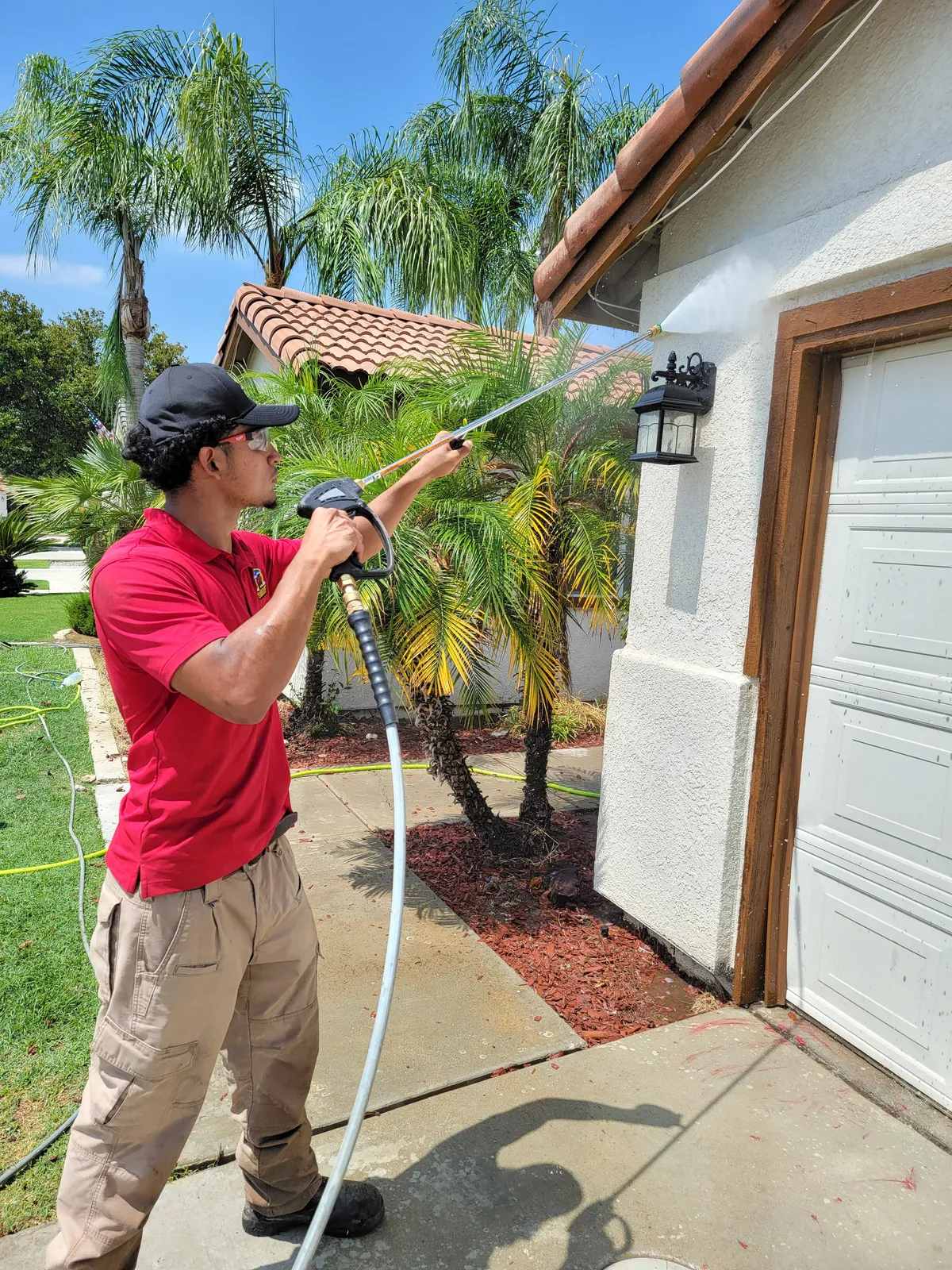
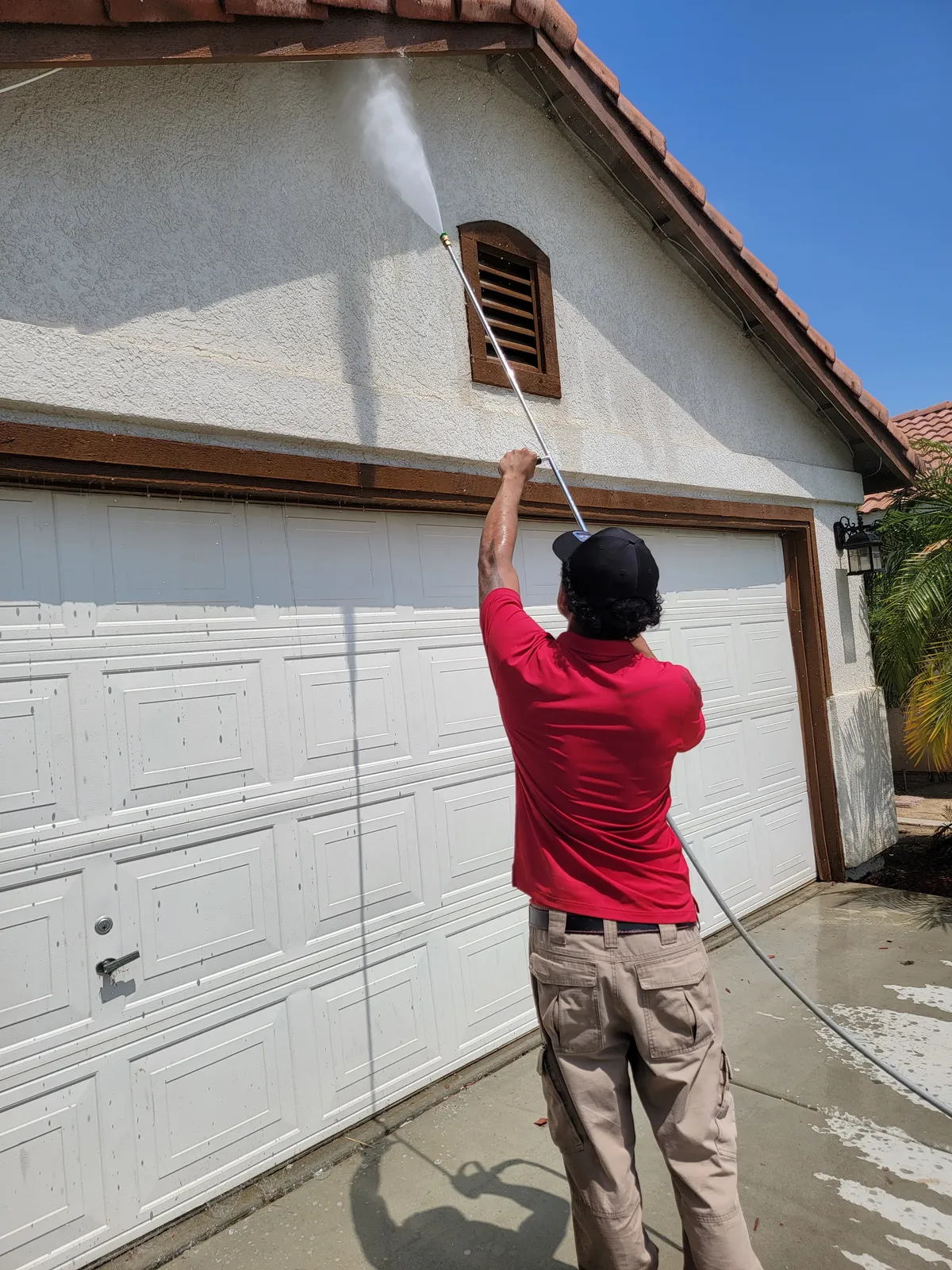
Recent Work in Bakersfield, CA
Save with a bundle
House Wash + Window Cleaning
Siding and glass done in one visit — cleaner result, one trip, lower price than booking separately.
Restore Your Property in Bakersfield, CA Today
Receive an instant, transparent quote mapped via high-resolution satellite imagery.
Looking for your town? Browse the 50-mile coverage array →